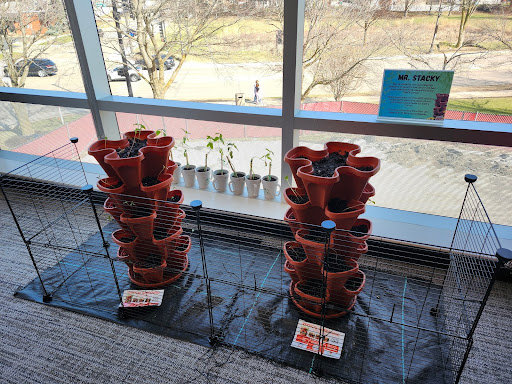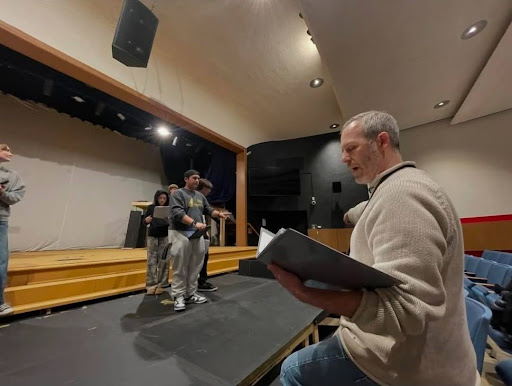
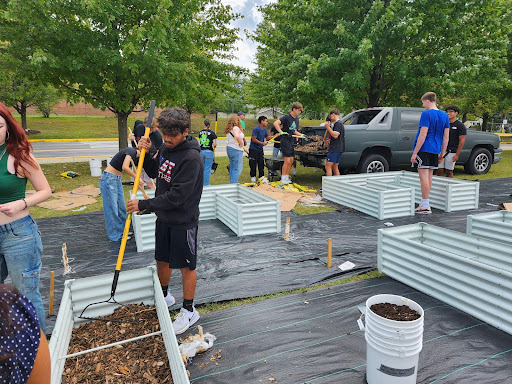
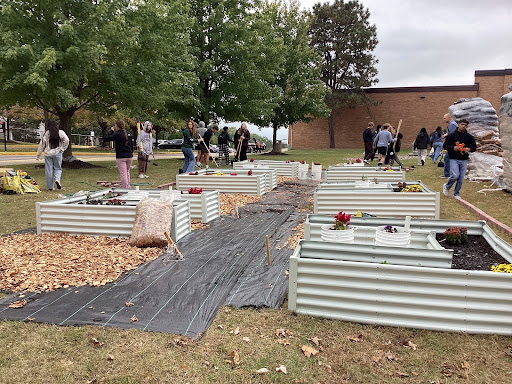
Beginning in early 2025, students in Glenbard East’s horticulture classes launched a community garden initiative funded by a grant from the Illinois State Board of Education’s Agricultural Incentive Program.
The student-led project builds on the garden beds already located outside the school but places a stronger focus on growing food to help alleviate hunger and support the culinary department.
Students in the Dual Credit Horticulture and Sustainable Urban Agriculture courses built, filled, and planted the beds themselves. The garden is located on the east side of the building facing Main Street.
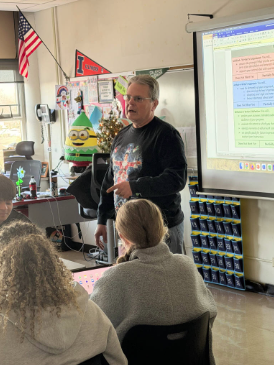
Horticulture and Sustainable Urban Agriculture teacher David Krodel said the project continues work started by students last year. “The goal is to improve the community around us and feed hungry students.”
Krodel said that much of the produce grown in the garden is used by the school’s culinary department. “All the food that can go to the culinary department will,” Krodel said, “The goal is to better the community around us.”
Students also have ideas for expanding the project in the future. Krodel said the classes are hoping to establish a pollinator garden.
Senior, Jade De Anda said she is excited about the possibility. “I know we’ve been talking about a potential pollinator garden, so that’s what I’m really hoping for,” Jade said. “I also think benches would make it more inviting for students.”
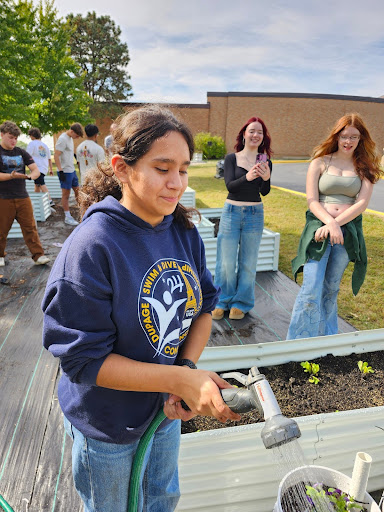
Jade said she enjoyed helping build the garden and learning more about how community donation gardens are created. “I always wondered how donation gardens were constructed and how much time it took,” she said.
She encouraged other students to consider taking agriculture or horticulture classes. “I feel like something students should know is that they should take some type of agriculture or horticulture class,”
Jade said, “Not just because of how awesome Mr. Krodel is, but because there’s more to planting than people realize. Many people don’t like getting their hands dirty, but when they do, they feel accomplished when they see a plant they cared for begin to grow,” she said.
Beyond the community garden itself, students in the course participate in Supervised Agricultural Experiences (SAEs), which provide additional opportunities for hands-on learning. These experiences range from team-based competitions like the Envirothon to construction projects such as building trellises for grapes at the community garden.
Krodel said the course offers something many traditional classes cannot. “The career and technical skill set that comes from the course, not many courses offer hands-on experiences for colleges, this course does both of that.”
Krodel said it involved “plant science, environmental stewardship, and a very active leadership element that can transfer into the workplace is an important part of our education.”